
Trade Show Booth AV: Guide to AV Technology & Equipment Rentals
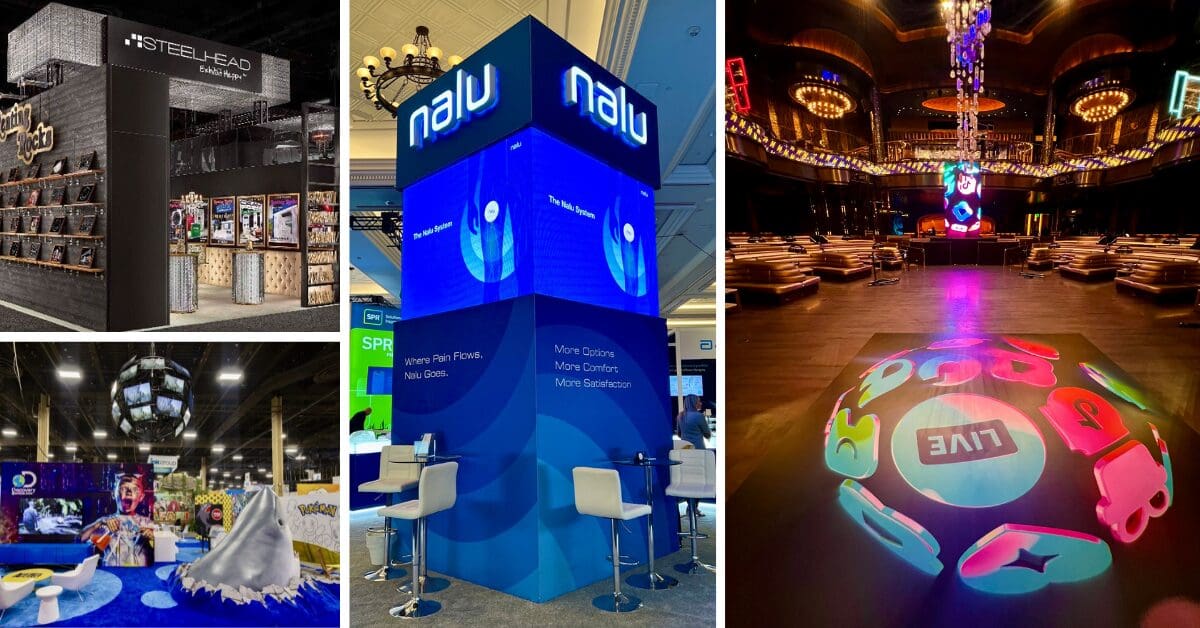
Trade show booth AV includes the equipment, technology integration, and technical support used to create engaging exhibits. From LED walls and digital displays to lighting, audio systems, interactive technology, and video production, the right AV solutions help exhibitors attract attention, communicate their messages, demonstrate products, and connect with prospective customers.
However, successful trade show AV requires more than renting equipment.
It takes careful coordination among exhibit builders, audiovisual specialists, content creators, show contractors, and event organizers. Decisions about screen size, mounting systems, electrical power, content, and technical staffing can affect everything from booth design to installation costs.
For exhibit builders, understanding these relationships is essential to delivering a successful exhibit.
This guide explores how to select the right AV technology, integrate it into a custom trade show booth, manage costs, avoid common mistakes, and work with an experienced AV production partner.
What Is Trade Show Booth AV?
Trade show booth AV refers to the audiovisual technology and production services used within an exhibition booth to communicate information, create visual impact, and support attendee engagement.
Common trade show AV solutions include:
-
LED video walls: Large-format digital displays used for branding, product demonstrations, and immersive visual experiences.
-
Commercial monitors: High-resolution displays for presentations, product information, and digital signage.
-
Interactive touchscreens: Displays that allow attendees to explore products, services, and digital content.
-
Professional audio systems: Speakers, microphones, and related equipment for presentations and demonstrations.
-
Exhibit lighting: Lighting systems that highlight products, reinforce brand identity, and create visual interest.
-
Video processing and switching: Equipment used to manage content across one or more displays.
-
Live presentation technology: Cameras, microphones, media playback systems, and other equipment supporting demonstrations or presentations.
-
Technical staffing: Experienced AV professionals who install, configure, operate, and troubleshoot equipment.
The appropriate combination depends on the exhibitor’s goals, the booth’s size and design, and the type of experience attendees should have. A 10-by-10-foot booth demonstrating software may need only a commercial monitor and touchscreen. A large island exhibit launching a new product might require an integrated LED wall, lighting, audio, and live presentation technology.
The goal is to use the right technology to communicate effectively.
Why Is AV Technology Important for Trade Show Booths?
In crowded convention centers, hundreds of exhibitors are competing for your attention. Some booths feature large LED walls displaying dramatic video content. Others use interactive displays, product demonstrations, and carefully coordinated lighting.
Then you notice a booth with a striking digital display. The visuals are compelling, but more importantly, the message is immediately clear. You understand what the company offers and why it matters.
You stop to learn more.
That’s the opportunity trade show booth AV creates. Well-designed audiovisual technology can help exhibitors accomplish several goals.
Capture attention on a crowded show floor
Trade show attendees encounter dozens or hundreds of competing visual messages.
Large-format displays, motion graphics, and strategic lighting can help an exhibit stand out.
However, attention alone isn’t the ultimate goal. The content also has to communicate something relevant to the intended audience.
Explain complex products and services
Some products are hard to demonstrate physically. A medical technology company may need to show how a device works inside the human body. A software company may want to demonstrate an application. An industrial manufacturer might need to explain equipment that’s too large to transport to the show.
Video, animation, interactive displays, and digital presentations can make these products easier to understand.
Encourage meaningful engagement
Interactive technology gives attendees an opportunity to participate rather than simply observe.
Visitors might explore a product catalog, compare configurations, watch a demonstration, or navigate a digital presentation. These experiences can help booth staff initiate more relevant conversations.
Reinforce brand identity
AV technology can support the overall exhibit design through coordinated visuals, lighting, sound, and digital content. When integrated thoughtfully, these elements create a consistent brand experience rather than a collection of unrelated screens.
What AV Equipment Do You Need for an Exhibit?
The right equipment depends on the booth’s purpose. Before selecting technology, exhibit builders should identify what the exhibitor wants attendees to see, understand, and do.
|
Exhibit goal |
Recommended AV technology |
|---|---|
|
Attract attention from a distance |
Large LED walls, motion graphics, strategic lighting |
|
Demonstrate software |
Commercial monitors, touchscreens, screen-sharing technology |
|
Launch a product |
LED video walls, presentation audio, video playback, lighting |
|
Explain complex processes |
Animated video, interactive displays, digital presentations |
|
Support live presentations |
Microphones, speakers, video switching, presentation displays |
|
Create an immersive experience |
Multiple synchronized displays, audio, lighting, custom LED configurations |
|
Facilitate meetings |
Monitors, video conferencing, controlled audio systems |
These solutions can be combined based on the exhibit’s size, audience, and budget.
For example, a large LED wall may attract visitors from the aisle, while smaller monitors inside the booth support detailed product demonstrations. This layered approach allows different technologies to serve different purposes.
How Do You Choose the Right LED Wall for a Trade Show Booth?
LED video walls are among the most versatile technologies available for trade show exhibits. They provide large, bright digital surfaces that can display video, graphics, animations, and presentations.
Unlike conventional televisions, modular LED walls can be configured in different dimensions and integrated into custom exhibit structures. However, choosing the right LED wall requires several technical decisions.
Pixel pitch and viewing distance
Pixel pitch is the distance between adjacent LED pixels, measured in millimeters. Smaller pixel pitches generally provide greater image detail at close viewing distances.
For many indoor trade show applications, pixel pitches between approximately 1.5 mm and 2.9 mm are worth evaluating. A fine-pitch display may be appropriate for detailed demonstrations viewed up close. A larger-pitch display may be sufficient for dramatic video content viewed from farther away.
Screen size and aspect ratio
LED wall dimensions should complement the booth design and support the intended content. A large wall may attract attention from across the show floor, but it can also overwhelm a small exhibit.
Aspect ratio is equally important. Custom LED configurations may require content specifically designed for unusual screen dimensions.
Brightness and image quality
Convention centers typically have significant ambient lighting. LED displays must be bright enough to remain visible without creating excessive glare or discomfort.
An experienced AV technician can adjust brightness, color, and contrast based on the actual show-floor environment.
Structural integration
LED walls have specific mounting, weight, electrical, and ventilation requirements. These considerations should be addressed during exhibit design rather than after fabrication.
Modular systems such as beMatrix LEDskin allow compatible LED panels to integrate into exhibit frameworks. As a beMatrix bePartner, Total Show Technology works with exhibit builders to incorporate LED displays into custom and modular exhibits while coordinating technical requirements with the overall design.
For more information, explore our guide to beMatrix LED technology for trade show exhibits.
When Should You Use Commercial Monitors Instead of LED Walls?
LED walls aren’t always the best solution.
Commercial monitors can provide excellent image quality for close-range viewing, particularly when displaying detailed text, software interfaces, technical diagrams, or presentations. They’re also relatively straightforward to install and operate.
LED walls vs. commercial monitors
|
Consideration |
LED walls |
Commercial monitors |
|---|---|---|
|
Display dimensions |
Highly configurable |
Fixed screen sizes |
|
Close-up text clarity |
Depends on pixel pitch |
Typically excellent |
|
Brightness |
Often well suited to bright exhibit environments |
Depends on display specifications |
|
Installation |
Requires modular assembly and processing |
Generally simpler |
|
Custom shapes |
Possible with compatible systems |
Limited |
|
Cost |
Often higher for large configurations |
Often more economical for smaller displays |
|
Best applications |
Large-format visuals, branding, immersive experiences |
Product demonstrations, detailed information, presentations |
Many successful exhibits use both.
An LED wall can attract attendees from a distance, while commercial monitors provide detailed information once visitors enter the booth. The important question is which technology best supports the intended viewing experience.
How Can Interactive Technology Improve Trade Show Engagement?
Interactive technology gives attendees greater control over how they experience an exhibit. Instead of watching a fixed presentation, visitors can explore information based on their interests.
Interactive touchscreens
Touchscreens are useful for product catalogs, configuration tools, software demonstrations, and educational content. They can also help exhibitors present large amounts of information without overwhelming visitors with printed materials.
Interactive product demonstrations
Some exhibits use sensors, cameras, or specialized software to create interactive demonstrations. For example, a manufacturer might allow attendees to explore different equipment configurations, while a healthcare technology company could demonstrate a digital workflow.
These experiences require coordination between the hardware, software, content, and technical support teams.
Digital storytelling
Interactive technology can also guide visitors through a narrative. A display might introduce a problem, explain the exhibitor’s solution, and invite visitors to explore specific features.
The most effective experiences are intuitive and purposeful. Technology should make information easier to understand, not create additional barriers.
What Role Does Audio Play in Trade Show Booth AV?
Audio can be valuable for presentations, demonstrations, and interactive experiences. However, convention centers present unique acoustic challenges.
Large exhibition halls are often noisy, with overlapping conversations, announcements, presentations, and equipment sounds. A poorly designed sound system can make it difficult for attendees to hear a demonstration—or create problems for neighboring exhibitors.
Choose audio equipment based on the application
A small booth presentation may need a compact speaker and wireless microphone. A larger exhibit hosting live demonstrations may require multiple speakers, microphones, mixers, and dedicated technical support.
Some applications benefit from directional audio systems that focus sound toward a specific listening area.
Consider neighboring exhibitors
Trade show organizers frequently establish sound-level restrictions.
Exhibit builders should review the event’s exhibitor manual and design audio systems accordingly.
Strategic speaker placement, appropriate volume levels, and careful sound-system tuning can improve intelligibility without overwhelming the surrounding environment.
Test audio under realistic conditions
A system that sounds excellent in a quiet warehouse may perform differently on a crowded show floor.
Audio testing should account for ambient noise, booth layout, presentation locations, and expected attendee traffic.
How Does Lighting Affect an Exhibit?
Lighting is an important part of exhibit design and audiovisual production. It can highlight products, reinforce brand colors, direct attention, and create a distinctive atmosphere. However, lighting should complement the overall visual experience.
Product lighting
Focused lighting can emphasize physical products, architectural features, and demonstration areas.
For example, an automotive exhibitor may use carefully positioned lighting to highlight vehicle details, while a technology company might illuminate product displays without creating glare on adjacent screens.
Architectural lighting
LED fixtures, illuminated structures, and accent lighting can reinforce the exhibit’s visual identity. These elements are especially effective when coordinated with the booth’s materials, graphics, and digital content.
Lighting for video and photography
If an exhibit includes live presentations, interviews, or video production, lighting must also support camera requirements. Poor lighting can produce harsh shadows, inconsistent skin tones, or unwanted reflections.
Exhibit builders should coordinate lighting and video requirements early when camera-based activities are planned.
How Do You Integrate AV Technology Into a Custom Trade Show Booth?
For exhibit builders, AV integration is one of the most important parts of the production process. A beautifully designed booth can have major problems if the technology isn’t coordinated with the physical structure.
LED walls, monitors, speakers, lighting fixtures, and interactive displays all introduce technical requirements. These may include structural support, electrical power, ventilation, cabling, equipment access, and installation sequencing.
Coordinate AV during initial design
AV specialists should review preliminary exhibit drawings before the design is finalized. This allows them to identify potential problems involving display dimensions, mounting methods, weight, power, and cable routing.
For example, a recessed LED wall may require precise structural dimensions and access for maintenance. Discovering these requirements after fabrication can lead to expensive modifications.
Plan cable management
Power and signal cables should be routed safely and discreetly. Cable paths must accommodate the equipment while avoiding interference with structural components, flooring, and attendee circulation.
Allow for equipment access
Some LED systems require front or rear access for maintenance. Video processors, media players, and other equipment also need appropriate placement, ventilation, and service access. A clean exhibit design shouldn’t come at the expense of technical functionality.
Coordinate installation responsibilities
The exhibit builder, AV provider, general service contractor, and venue may all have responsibilities during installation. Establishing these responsibilities early helps avoid delays and confusion.
What Are the Most Common Exhibitor Mistakes?
Many AV problems can be prevented through better planning and coordination.
1. Choosing equipment before defining the goals
A large LED wall may look impressive, but it isn’t necessarily the right solution for every exhibit. Start by identifying the audience, communication goals, and intended visitor experience.
2. Treating AV as a last-minute addition
Adding technology after the booth has been designed can create structural, electrical, and installation challenges. Involve your AV partner early.
3. Ignoring content specifications
An LED wall’s pixel dimensions and aspect ratio affect how content should be created. Poorly matched content may appear stretched, cropped, or less detailed than expected.
4. Underestimating electrical requirements
LED walls, monitors, lighting, and audio equipment all require power. Failing to plan electrical distribution can create installation delays and unexpected costs.
5. Overlooking technical staffing
Complex AV systems may require experienced technicians during installation, testing, and show operations. An equipment rental alone doesn’t guarantee reliable performance.
6. Failing to plan for equipment problems
Even high-quality equipment can experience failures.
Discuss backup equipment, spare cables, replacement panels, and technical escalation procedures before the event.
How Much Does Trade Show Booth AV Cost?
Trade show booth AV costs vary considerably depending on equipment, booth size, installation requirements, event duration, and technical support.
A small booth using one or two commercial monitors will generally require a smaller AV investment than a large exhibit featuring integrated LED walls, interactive displays, lighting, and live presentations.
What affects AV rental pricing?
|
Cost factor |
Why it matters |
|---|---|
|
Equipment type |
LED walls, monitors, lighting, and audio have different rental costs |
|
Display size and resolution |
Larger displays and finer pixel pitches may increase costs |
|
Rental duration |
Multi-day events and extended installation periods affect pricing |
|
Installation complexity |
Custom structures and specialized mounting require additional labor |
|
Venue requirements |
Electrical service, rigging, and labor rules vary |
|
Transportation |
Shipping and material handling affect total project costs |
|
Technical staffing |
Installation, operation, and show-site support require skilled personnel |
|
Content production |
Custom video, animation, and interactive software may be separate expenses |
Look beyond the equipment rental price
A low equipment quote may not include installation labor, electrical service, rigging, transportation, or show-site technical support.
Exhibit builders should request detailed estimates that clarify what’s included and what must be arranged separately.
This is particularly important for projects involving multiple contractors.
Should You Rent or Buy Trade Show AV Equipment?
For many exhibitors and exhibit builders, renting AV equipment provides flexibility and reduces the responsibilities associated with ownership. Renting allows the technology to change from one event to another.
An exhibitor may need a large LED wall for a major product launch, several monitors for a smaller conference, and an interactive display for a regional trade show. Purchasing can make sense for organizations that repeatedly use the same equipment and have the resources to manage transportation, storage, maintenance, and technical operations.
The decision should account for total ownership costs rather than equipment price alone.
How Do You Plan Trade Show AV Installation and Dismantling?
Installation and dismantling are critical parts of trade show AV production. Even well-designed systems can encounter problems when schedules, responsibilities, or dependencies aren’t clearly defined.
Before installation
Confirm equipment availability, venue requirements, electrical orders, rigging approvals, installation schedules, and content specifications. Review exhibit drawings and identify dependencies among structural construction, flooring, electrical service, and AV installation.
During installation
Coordinate the sequence of work. For example, an LED wall may need structural framing completed before panels can be installed.
Electrical service must be available before equipment can be fully tested. Technicians should have sufficient time to configure displays, verify signal paths, calibrate images, and test content.
Before the show opens
Complete a full technical check. Verify that displays operate correctly, audio levels are appropriate, content plays as intended, and backup procedures are understood.
During the show
Monitor critical systems and provide support appropriate to the complexity of the exhibit. For live presentations, establish clear procedures for switching content, managing microphones, and responding to technical issues.
During dismantling
Coordinate equipment removal with exhibit teardown. LED panels, processors, cables, and other components should be packed and handled according to equipment requirements.
Careful dismantling helps prevent damage and supports efficient outbound logistics.
Why Is Professional AV Staffing Important?
The quality of trade show AV depends on both the equipment and the people supporting it.
Experienced AV technicians understand how to install, configure, operate, and troubleshoot complex systems. They also understand the pressures of live event environments, where installation schedules are tight and problems must be resolved quickly.
Technical expertise
Professional technicians can configure video processors, manage signal distribution, calibrate displays, troubleshoot audio systems, and support interactive technology.
Coordination with exhibit builders
AV crews need to work alongside exhibit builders, electricians, riggers, and other contractors. Clear communication helps prevent installation conflicts and unnecessary delays.
Show-site problem solving
Unexpected issues can arise even with careful planning. An experienced technician may be able to resolve a signal problem, replace a faulty component, or adjust display settings without disrupting the exhibitor’s activities.
Reliable execution
Exhibitors depend on their technology to perform throughout the event. Professional staffing helps reduce the risk of technical problems affecting presentations, demonstrations, and attendee experiences.
What Should You Look for in a Trade Show AV Partner?
Choosing the right AV partner is as important as selecting the equipment.
For exhibit builders, the ideal provider understands both audiovisual production and the practical demands of exhibit construction. Look for a partner with experience in trade show environments, access to appropriate equipment, skilled technicians, and a collaborative approach.
Ask prospective providers:
-
Can you review exhibit drawings and identify AV integration requirements?
-
What LED wall, display, audio, and lighting technologies are available?
-
Do you have experience working with custom and modular exhibit systems?
-
Can you provide technical specifications for content development?
-
Who handles installation, testing, and dismantling?
-
What show-site support is available?
-
How are equipment failures and technical emergencies addressed?
-
Can you coordinate with venue contractors and other production teams?
-
What costs are included in the estimate?
The answers can reveal important differences among providers.
How Does Total Show Technology Support Trade Show Booth AV?
With 30 years of experience in audiovisual production, Total Show Technology (TST) works with exhibit builders, exhibitors, and meeting planners to deliver advanced AV solutions for trade shows, conventions, and corporate events.
TST provides LED walls, commercial displays, audio systems, lighting, interactive technology, equipment rentals, and skilled technical staffing. As a beMatrix bePartner, TST also supports the integration of modular LED technology into custom exhibit designs.
Our role extends beyond equipment rental. By collaborating with exhibit builders during planning, installation, and show operations, TST helps identify practical technology solutions, coordinate technical requirements, and support reliable execution.
Whether a project involves a single display or a complex exhibit with multiple audiovisual systems, the goal is the same: create an effective, technically sound experience that helps the exhibitor communicate its message and connect with attendees.
Frequently Asked Questions About Trade Show Booth AV
What does AV mean for a trade show booth?
AV stands for audiovisual. Trade show booth AV includes technologies such as LED walls, monitors, audio systems, lighting, interactive displays, and video equipment, along with the technical services needed to install and operate them.
What AV equipment is best for a small trade show booth?
Small booths often benefit from commercial monitors, compact audio systems, and interactive touchscreens. The right equipment depends on the exhibitor’s goals, available space, and budget.
Do I need an LED wall for my trade show booth?
Not necessarily. LED walls are useful for large-format visuals, branding, and immersive experiences, but commercial monitors may be better suited to detailed presentations or smaller exhibits.
How much does it cost to rent trade show AV equipment?
Rental costs depend on equipment type, quantity, event duration, installation requirements, venue services, and technical staffing. Request a detailed quote covering the complete AV production scope.
Can AV equipment be integrated into a custom exhibit?
Yes. LED walls, monitors, speakers, lighting, and interactive displays can be incorporated into many custom and modular exhibit designs. Structural, electrical, and access requirements should be addressed during design.
How far in advance should I arrange trade show AV rentals?
Begin planning during the exhibit design phase. Larger or more complex projects often benefit from several months of preparation to coordinate equipment, content, labor, and venue requirements.
Do AV rental companies provide technicians?
Many professional AV rental providers offer installation, operation, and technical support services. However, staffing arrangements vary, so confirm exactly what’s included in the rental agreement.
What is the difference between trade show AV rental and AV production?
AV rental generally refers to providing equipment. AV production encompasses a broader range of services, including planning, system design, equipment integration, installation, technical staffing, operation, and troubleshooting.
Can trade show AV equipment support live demonstrations?
Yes. With appropriate video switching, processing, audio, and presentation systems, AV equipment can support live product demonstrations, camera feeds, software presentations, and other real-time content.
How can exhibit builders reduce trade show AV costs?
Involve the AV partner early, choose equipment based on actual requirements, coordinate installation schedules, reuse appropriate content, and request complete estimates that account for labor, power, transportation, and technical support.
Great Trade Show Booth AV Starts With Great Planning
Successful trade show booth AV doesn’t necessarily require the biggest screens or the most sophisticated equipment.
It’s about choosing technology that supports the exhibitor’s message, complements the booth design, and performs reliably throughout the event. For exhibit builders, that requires coordination among designers, AV specialists, content creators, and installation teams.
By planning early, understanding technical requirements, and working with experienced professionals, exhibit builders can create visually compelling, engaging exhibits without unnecessary complications.
Total Show Technology combines advanced AV technology, experienced technicians, and decades of production expertise to help exhibit builders deliver successful trade show experiences.
Are you ready to explore how the right trade show booth AV solutions can help your next exhibit capture attention, communicate a clear message, and stand out on the show floor? Let’s talk.