
How to Choose the Right LED Wall for a Trade Show Exhibit
Choosing the right LED wall for a trade show involves more than selecting a screen size. You need to consider viewing distance, pixel pitch, booth dimensions, brightness, content, installation requirements, and budget. The best LED wall is one that fits your exhibit design, captures attention, communicates your message, and performs reliably throughout the show.
Imagine walking onto a busy trade show floor in Las Vegas. Hundreds of exhibitors are competing for attention. Some booths feature enormous LED walls displaying dazzling animations. Others use smaller, strategically placed screens to demonstrate products, tell brand stories, or invite attendees into a conversation.
One exhibit catches your eye from across the aisle. Its LED wall is bright, sharp, and seamlessly integrated into the booth design. The visuals are compelling, and you immediately understand what the company does.
A few aisles later, you notice another exhibit with an equally large display. But the text is difficult to read, the content looks stretched, and the screen overwhelms the rest of the booth. The technology is impressive, but the message gets lost.
What's the difference? It's not necessarily the equipment. It's how the LED wall was selected, designed, installed, and used.
For exhibit builders and meeting planners, understanding these differences is essential to making smart investments in trade show audiovisual technology.
What Is an LED Wall for a Trade Show?
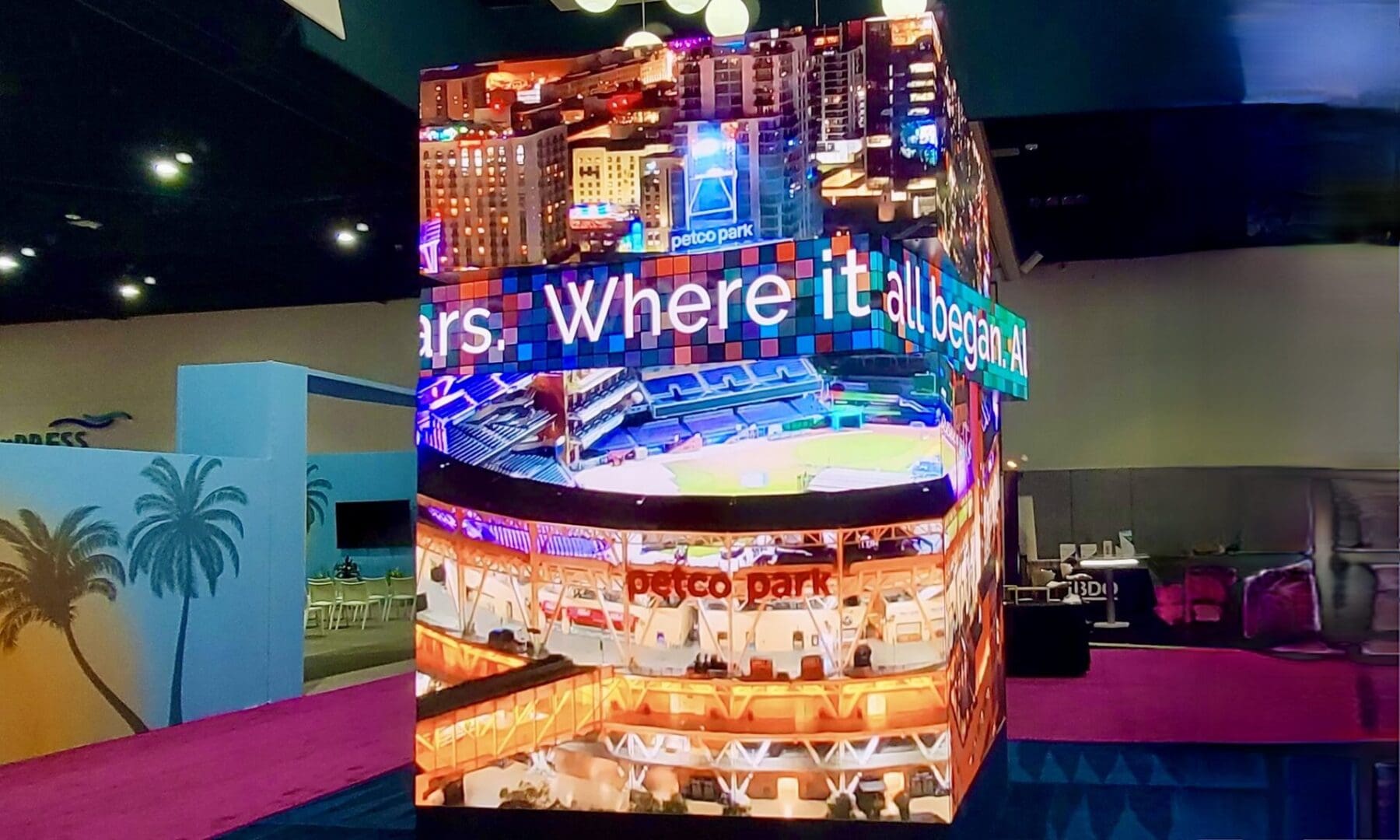
An LED wall is a large-format digital display assembled from individual LED panels or modules. These panels connect to create a continuous visual surface capable of displaying videos, animations, graphics, presentations, and other digital content.
Unlike conventional televisions, modular LED walls can be configured in different sizes, shapes, and aspect ratios to accommodate specific exhibit designs.
Trade show LED walls are commonly used for:
- Large-format brand messaging and product launches
- Video presentations and product demonstrations
- Interactive experiences and digital storytelling
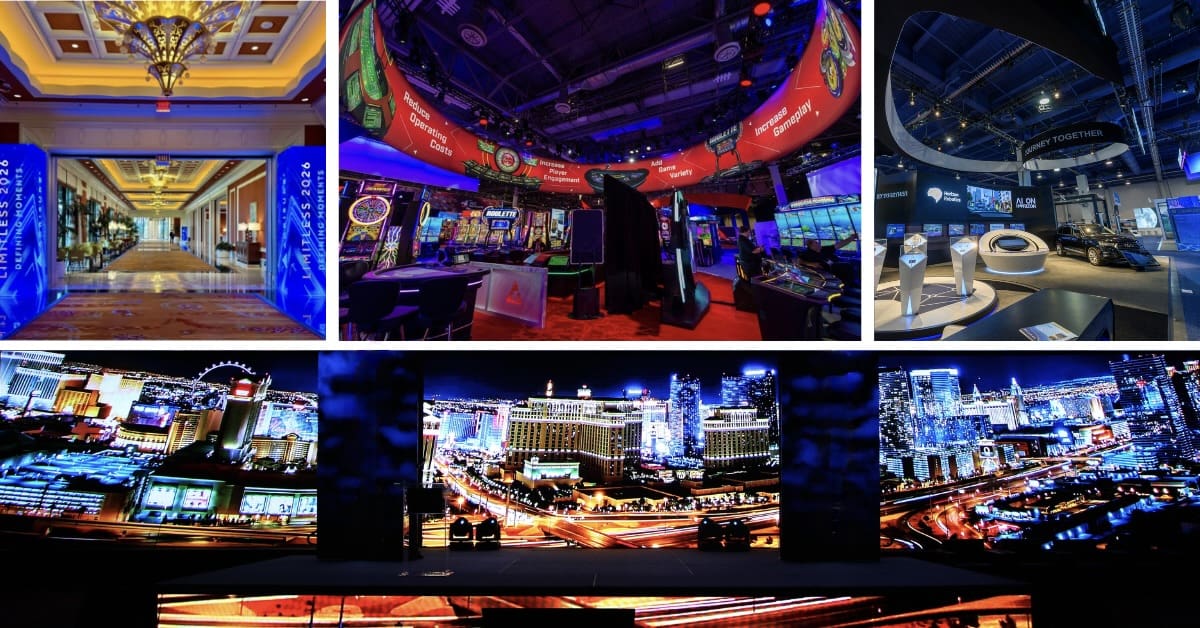
- Architectural elements integrated into custom exhibits
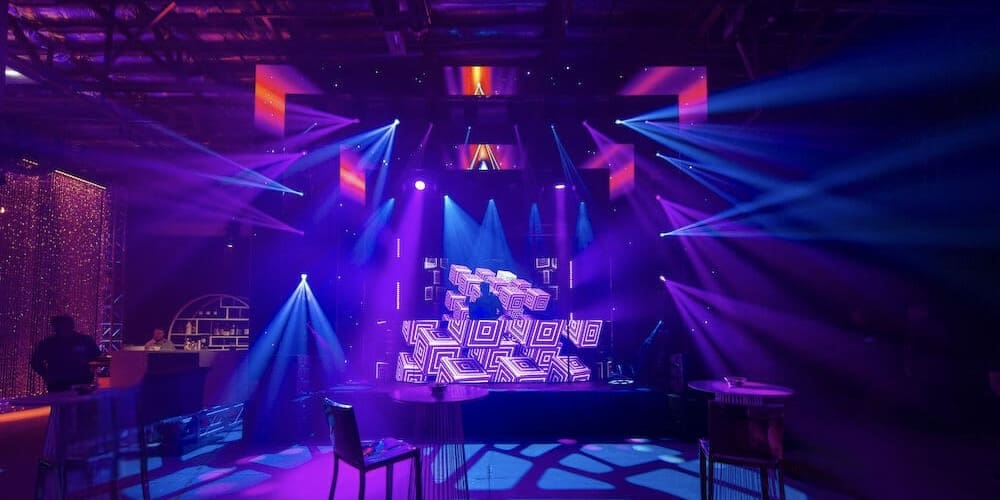
- Conference stages, keynote presentations, and general sessions
- Eye-catching visuals designed to attract attendees from across the exhibit hall
LED walls are particularly valuable in busy convention environments because they combine scale, brightness, and visual flexibility.
However, not every LED wall is appropriate for every trade show booth.
How Do You Choose the Right LED Wall for a Trade Show?
The right LED wall depends on seven primary considerations: viewing distance, pixel pitch, screen size, brightness, content, installation requirements, and total cost.
| FACTOR | WHAT TO CONSIDER |
| Viewing distance |
How close will attendees stand to the display? |
| Pixel pitch | How much detail must the display reproduce? |
| Screen size | What dimensions fit the booth and the message? |
| Brightness | How much ambient light is present? |
| Content | Will the wall show video, text, animations, or demonstrations? |
| Installation | Can the booth safely accommodate the wall's weight, power, and mounting requirements? |
| Budget | What is the total cost of equipment, labor, content preparation, and support? |
These factors are interconnected. A decision about screen size affects resolution, content development, structural support, and installation costs.
That's why experienced exhibit builders involve their audiovisual production partners early in the design process rather than treating AV as a last-minute addition.
1. What Pixel Pitch Is Best for a Trade Show LED Wall?
Pixel pitch is one of the most important technical specifications when choosing an LED wall.
Pixel pitch refers to the distance, measured in millimeters, between the centers of adjacent pixels. A smaller pixel pitch means pixels are positioned closer together, producing a higher-resolution image at a given screen size.
For example, a 1.9 mm LED wall has more pixels per square meter than a 3.9 mm wall. That difference becomes especially important when attendees stand close to the display.
LED wall pixel pitch comparison
| Pixel pitch | Typical application | General viewing guidance |
| 1.2-1.5 mm | Premium close-viewing displays, detailed text, and product demonstrations | Approximately 4-6 feet or closer, depending on content |
| 1.8-2.5 mm | Trade show booths with nearby attendees and mixed video/text content | Approximately 6-10 feet |
| 2.6-2.9 mm. | Medium-to-large exhibits with moderate viewing distances | Approximately 9-15 feet |
| 3.9 mm | Large displays primarily viewed from farther away | Approximately 13 feet or more |
These are practical starting points, not fixed minimum viewing distances. Perceived image quality also depends on visual acuity, content detail, display processing, and the manufacturer’s specifications.
A finer pixel pitch generally provides greater detail, but it also tends to increase rental costs.
The most expensive LED wall isn’t automatically the best choice. For example, a large LED wall showing dramatic automotive footage at a major trade show may perform beautifully with a 2.9 mm pixel pitch. A smaller display showing detailed medical-device diagrams or software interfaces may benefit from a finer pitch.
The key question is not “What’s the highest resolution available?” It’s “What resolution does this audience need at this viewing distance?”
2. How Big Should an LED Wall Be for a Trade Show Booth?
There’s no universal formula for selecting the right LED wall size. The ideal dimensions depend on booth size, available sightlines, intended viewing distance, content, and the role of the display within the overall exhibit.
A 10-by-10-foot booth might benefit from a compact LED display integrated into its back wall. A 20-by-20-foot island exhibit could accommodate a larger display or multiple coordinated LED surfaces.
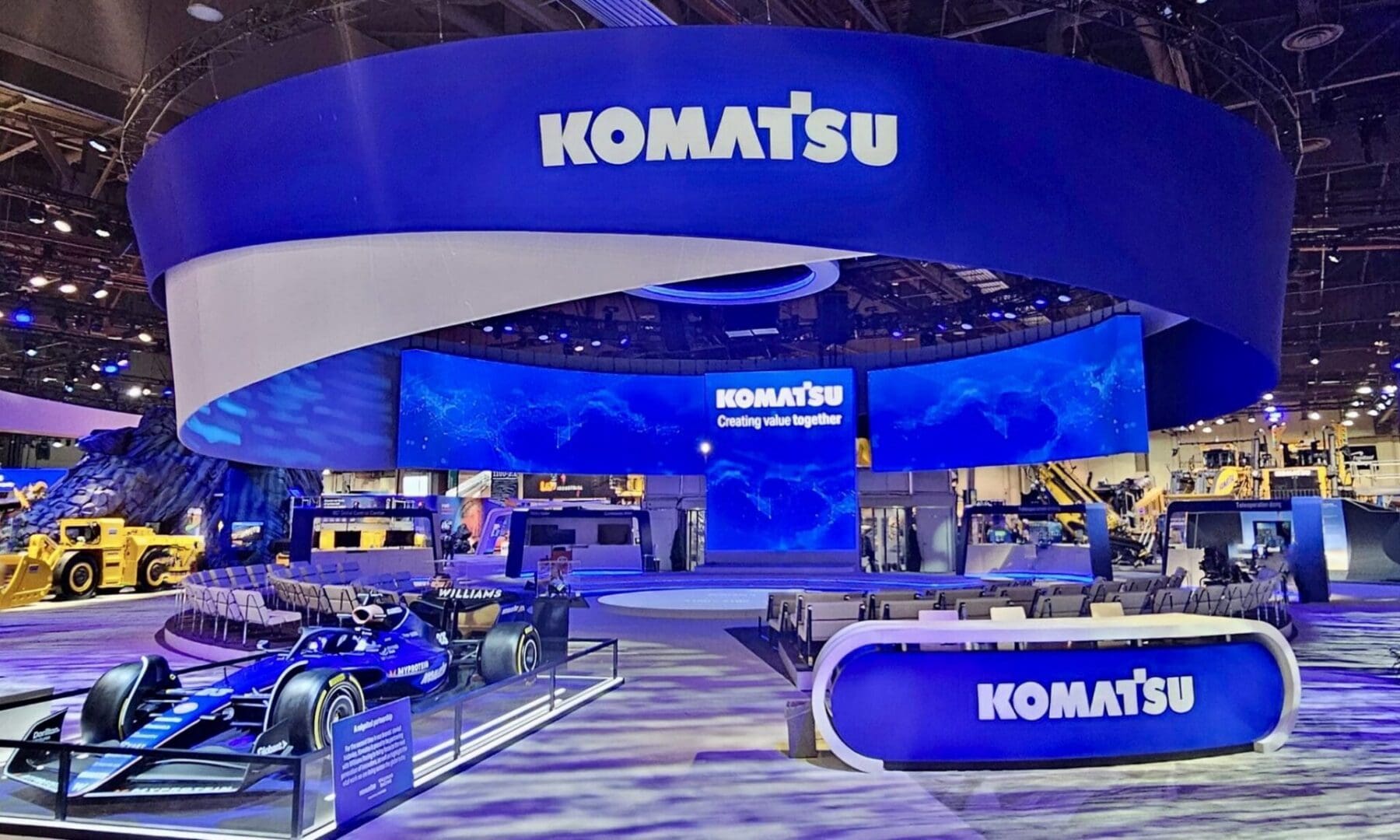
Larger island exhibits may use LED walls as major architectural features, including overhead elements, corner displays, or expansive video backdrops.
However, bigger isn’t always better. An oversized LED wall can dominate a booth, make the exhibit feel cramped, or distract from the products and people that attendees came to see.
Match the display to the purpose
Before selecting dimensions, ask:
- Is the LED wall intended to attract people from across the aisle?
- Will it provide a backdrop for product demonstrations?
- Does it need to display detailed information that attendees will read up close?
- Will visitors watch presentations while standing or sitting?
- Is the wall the central visual feature or one element of a larger exhibit?
A wall designed to attract distant attendees has different requirements from one supporting detailed, face-to-face demonstrations.
Don’t forget the aspect ratio
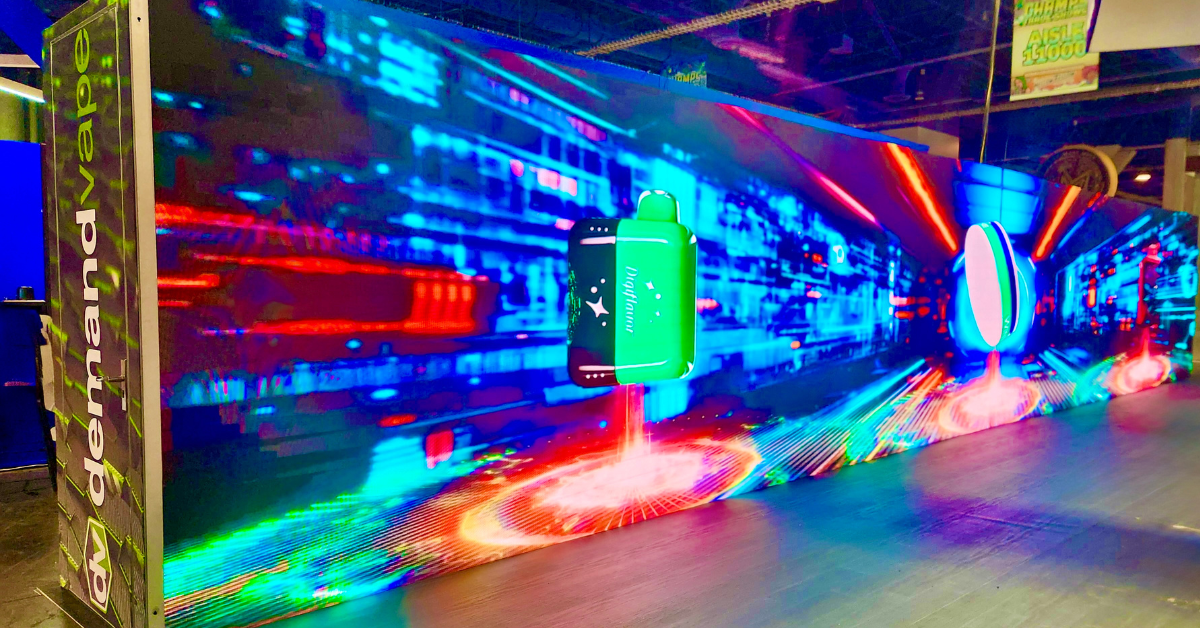
Aspect ratio describes the relationship between a display’s width and height. Many video assets are produced in a 16:9 format. However, custom trade show exhibits frequently use wide, narrow, vertical, or irregular LED configurations.
These creative arrangements can be visually striking, but they require content developed for the actual display dimensions. Forcing standard video into an unusually shaped LED wall can produce cropped images, distorted graphics, or large areas of unused screen space.
Coordinate the LED wall configuration and content requirements before finalizing the exhibit design.
3. How Bright Should a Trade Show LED Wall Be?
LED walls are popular in trade show environments partly because they can remain highly visible under bright convention-center lighting.
Brightness is typically measured in nits, also called candelas per square meter (cd/m²). Indoor LED displays commonly offer maximum brightness levels in the hundreds to low thousands of nits, depending on the product. However, maximum brightness isn’t the same as ideal operating brightness.
An excessively bright display can create glare, overwhelm nearby exhibits, and make prolonged viewing uncomfortable. The appropriate setting depends on several factors, including ambient lighting, display placement, viewing distance, and neighboring exhibits.
Consider the surrounding environment
A display installed beneath powerful convention-center lighting may need different brightness settings than one positioned inside an enclosed demonstration area. Likewise, a wall facing a brightly illuminated aisle may require different adjustments than a display surrounded by dark exhibit materials.
An experienced AV technician can calibrate brightness, color, and contrast for the actual conditions on the show floor.
One commonly overlooked consideration: The way an LED wall looks in a warehouse demonstration may differ substantially from how it performs inside a finished trade show exhibit. Testing and calibration at the venue matter.
4. What Type of LED Wall Content Works Best at a Trade Show?
A high-resolution LED wall won’t accomplish much if the content is confusing, difficult to read, or poorly suited to the audience. For exhibit builders, content should influence equipment selection, not simply be added after the display has been installed.
Consider the difference between two exhibitors.
One plays a continuous five-minute corporate video filled with detailed text and lengthy explanations. The other uses short, visually compelling sequences that quickly communicate what the company offers, why it matters, and what visitors can learn by entering the booth.
The second approach is generally better suited to attracting people who are walking past.
Design content for different viewing situations
Trade show LED wall content typically serves three purposes.
- Attract attention from a distance. Use bold visuals, recognizable branding, movement, and short messages that can be understood quickly.
- Communicate a message. Explain the product, service, or competitive advantage through clear visuals and concise language.
- Support engagement. Use demonstrations, product animations, and interactive content to encourage meaningful conversations.
These purposes can coexist within one exhibit, but they may require different displays or content sequences.
Technical content considerations
Content creators should understand the display’s native pixel dimensions, aspect ratio, media processing system, and playback requirements. For example, a 5-meter-wide LED wall with a 2.5 mm pixel pitch has approximately 2,000 horizontal pixels, assuming a fully active width of exactly 5,000 mm.
If the content is designed without considering that pixel matrix, important elements may appear cropped, poorly scaled, or less detailed than expected.
Also consider whether the display will show live camera feeds, software demonstrations, presentations, or prerecorded media. These sources may have different resolution, scaling, switching, and latency requirements.
An experienced AV production partner can help establish technical specifications before content production begins.
5. Should You Choose a Flat, Curved, or Custom LED Wall?
One advantage of modular LED technology is its flexibility.
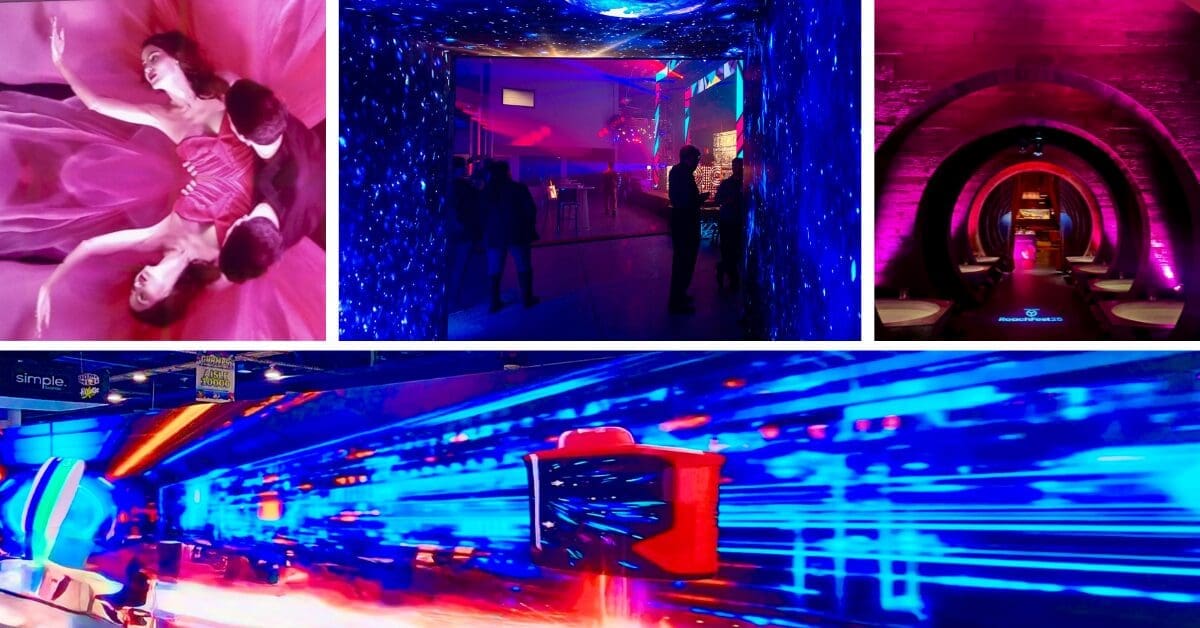
LED walls aren’t limited to conventional rectangular screens. Depending on the system, they can be configured into creative architectural elements that integrate with the overall exhibit design.
Flat LED walls
Flat displays are versatile and suitable for product presentations, brand messaging, and video backdrops. They’re often the most straightforward option for content production and installation.
Curved LED walls
Curved displays can create a sense of depth and help wrap visual content around an exhibit. They require compatible hardware, appropriate structural design, and content planning.
Custom and architectural LED configurations
LED panels can be incorporated into corners, columns, scenic structures, and other exhibit features. Not every LED product supports every configuration, so hardware compatibility must be confirmed early.
Custom configurations can be particularly effective for exhibitors looking to distinguish themselves on crowded show floors.
However, they introduce additional planning considerations involving structural engineering, power distribution, content mapping, access for maintenance, and installation labor. Creative freedom needs to be balanced with practical execution.
6. How Do You Integrate an LED Wall Into a Trade Show Exhibit?
For exhibit builders, LED wall integration is one of the most important (and often underestimated) parts of the project.
An LED wall isn’t simply a screen that gets attached to a finished booth. It’s a technical system that must work with the exhibit’s architecture, structural support, electrical design, and installation schedule.
Modular exhibit systems and integrated LED technology
Some LED systems are specifically designed to integrate with modular exhibit frameworks.
For example, beMatrix LEDskin is designed to work with the company’s b62 frame system. Its 62 mm-deep cabinets allow LED surfaces to integrate into compatible exhibit structures, with cabling concealed within the framework. The system includes several pixel-pitch options, including 1.5 mm, 1.9 mm, and 2.5 mm, giving exhibit builders flexibility based on viewing distance and application.
This approach can be especially useful when LED technology needs to appear as an integral part of the exhibit rather than an independent screen.
Plan for the entire installation
Exhibit builders should coordinate with their AV partner on several technical requirements:
- Structural support: The exhibit must accommodate the LED wall’s weight, mounting configuration, and applicable engineering requirements.
- Power distribution: Electrical requirements depend on the number and type of panels, display brightness, processors, and associated equipment.
- Ventilation and heat: The design must accommodate the manufacturer’s thermal and airflow requirements.
- Cable management: Power and signal cables need safe, accessible routes that don’t interfere with exhibit construction.
- Service access: Technicians may need access to the front or rear of the wall to replace panels or troubleshoot equipment.
- Installation sequencing: LED installation must be coordinated with flooring, framing, graphics, lighting, and other exhibit components.
These details are especially important in Las Vegas convention facilities, where tight installation schedules and venue-specific labor requirements can complicate otherwise straightforward projects.
7. Should You Rent or Buy an LED Wall for Trade Shows?
For many exhibitors and exhibit builders, renting an LED wall is more practical than purchasing one.
Rentals provide access to professional-grade equipment without requiring a major capital investment. They also allow the technology to change from one event to another.
Purchasing may make sense for organizations that use the same LED system frequently and have the resources to manage transportation, storage, maintenance, and technical operations.
| Consideration | Renting | Buying |
| Initial expense | Project-based rental cost | Significant capital investment |
| Equipment flexibility |
Different systems for different shows | Primarily limited to owned inventory |
| Maintenance | Managed by rental provider under the agreement | Owner’s responsibility |
| Storage and transportation |
Often coordinated through rental partner | Owner must arrange |
| Technology upgrades |
Access to other equipment as needs evolve | Requires additional investment |
| Best suited for | Occasional events and changing exhibit designs | Frequent, repeatable deployments |
How Much Does a Trade Show LED Wall Rental Cost?
LED wall rental pricing varies substantially based on equipment specifications and the scope of the event. The biggest cost drivers typically include display size, pixel pitch, mounting requirements, rental duration, installation labor, processing equipment, transportation, and technical support.
For a meaningful quote, provide your AV partner with the booth dimensions, show dates, venue, expected viewing distance, proposed wall size, content requirements, and any structural drawings already available.
Be sure to request a complete project estimate rather than an equipment-only price. An inexpensive panel rental can become a costly project if the estimate excludes installation, power distribution, rigging, show labor, or technical support.
8. What Do Exhibit Builders Often Overlook When Selecting LED Walls?
Most LED wall buying guides focus on display specifications. Those specifications matter, but they don’t tell the whole story.
The following issues can have just as much impact on the success of an exhibit.
The angle from which attendees approach
Trade show visitors rarely approach a booth from one perfectly centered position. An LED wall may look spectacular when viewed straight on but be less effective from adjacent aisles or oblique angles.
Consider the expected traffic flow and viewing angles before deciding where to position the display. Evaluate actual image quality from relevant positions, rather than relying only on a manufacturer’s maximum viewing-angle specification.
Camera compatibility and refresh rates
If the exhibit will be photographed, live-streamed, or filmed, the LED wall’s refresh rate, scan behavior, and camera compatibility become important. Some LED displays can produce visible banding, flicker, or other artifacts when recorded, even though the images look fine to the naked eye.
For camera-heavy applications, ask the AV partner to test the proposed system with the intended camera equipment and frame rates.
Spare panels and backup equipment
A malfunctioning LED panel can create a noticeable dark area in an otherwise impressive display.
Before the show begins, establish how replacement panels, processors, signal cables, and other critical components will be handled. Also ask whether spare equipment will be available on-site and how quickly technical problems can be resolved.
Labor rules and installation deadlines
Trade show venues often have specific rules governing electrical work, rigging, material handling, and installation labor. For overhead LED installations, venue and show rules can affect allowable configurations, suspension methods, and installation procedures.
An AV partner familiar with the venue can help identify these requirements before they create scheduling or budget problems.
The experience of the technicians
Even sophisticated LED equipment requires skilled people to install, configure, operate, and troubleshoot it.
A qualified technician understands more than how to connect panels. They know how to configure processors, map content, calibrate color, manage signal distribution, and respond quickly when something doesn’t work as expected. The reliability of an LED wall depends on both the technology and the people supporting it.
9. Is an LED Wall Always Better Than a Large Television or Projector?
Not necessarily. LED walls offer tremendous flexibility and visual impact, but other display technologies may be better suited to certain applications.
Large commercial monitors can provide exceptional clarity for close-range viewing, especially when detailed text, spreadsheets, or software interfaces are involved.
Projection can be effective for presentations or large-format displays in environments where lighting and projection surfaces can be controlled.
| Technology | Key advantages | Potential limitations |
| LED wall | Scalable dimensions, high brightness, custom configurations | Higher complexity & potentially greater cost |
| Commercial display | Great close-up image quality, relatively simple setup | Fixed screen dimensions & visible borders between multiple units |
| Projection | Large image sizes & flexible applications | Sensitive to ambient light & projection geometry |
For some exhibits, a combination of technologies works best. A large LED wall can attract attendees from across the show floor, while smaller commercial displays provide detailed demonstrations once visitors enter the booth.
The goal is to select the right technology for each communication need rather than defaulting to the largest or most expensive option.

10. How Can an LED Wall Help a Trade Show Exhibit Generate Better Results?
The real value of an LED wall is measured less by screen size or resolution and more by what the technology helps the exhibitor accomplish.
Does the display attract the right audience? Does it communicate a clear message? Does it support product demonstrations? Does it help salespeople start conversations?
These questions are important because exhibitors are investing in business outcomes, not just equipment. That distinction matters. A spectacular LED wall that attracts people with no interest in the exhibitor’s products may deliver less value than a more targeted display that encourages meaningful engagement.
For exhibit builders, this suggests a practical approach: design the LED experience around the desired visitor behavior.
A successful LED wall might encourage someone to stop, watch a demonstration, explore a product, enter a meeting area, or ask a question. Those outcomes should shape the technology decisions.
11. Why Work With an Experienced Trade Show AV Partner?
Choosing the right LED wall is easier when the AV partner understands the realities of exhibit design and trade show production. An experienced provider can help exhibit builders evaluate equipment options, coordinate with designers, identify technical constraints, prepare content specifications, and plan installation and support.
That’s particularly valuable when projects involve custom LED configurations, modular exhibit systems, multiple display technologies, or demanding venue requirements.
Total Show Technology (TST) works with exhibit builders, exhibitors, and meeting planners to deliver audiovisual solutions for trade shows, conventions, and corporate events. With advanced LED technology, AV equipment rentals, skilled technicians, and production support, TST helps clients create exhibits that capture attention and communicate their messages clearly.
The most effective partnerships begin early, when technology can be incorporated into the design rather than added after major decisions have already been made.
Frequently Asked Questions About Trade Show LED Walls
What is the best LED wall for a trade show booth?
The best LED wall is one that matches the booth’s size, viewing distance, content, and installation requirements. Fine-pitch LED displays are often appropriate for close viewing, while larger-pitch systems may be sufficient for displays intended to attract attention from farther away.
What pixel pitch should I use for a trade show LED wall?
A pixel pitch between approximately 1.5 mm and 2.9 mm is a useful range to evaluate for many indoor trade show applications. The appropriate choice depends on viewing distance, content detail, display dimensions, and budget. Larger pitches may work well for distant viewing.
How much does it cost to rent an LED wall for a trade show?
Costs depend on wall dimensions, pixel pitch, rental duration, venue, installation complexity, equipment, and technical staffing. A complete quote should account for the entire production scope, not just LED panels.
Can an LED wall be integrated into a custom trade show booth?
Yes. Modular LED systems can be integrated into many custom and modular exhibit designs. Some products, such as beMatrix LEDskin, are specifically engineered to fit compatible exhibit frame systems.
Do LED walls require special electrical power?
LED walls require properly planned electrical distribution. The exact requirements depend on the number of panels, their power consumption, the processing equipment, and the manufacturer’s specifications. Electrical requirements should be confirmed before installation.
Can an LED wall display live video and presentations?
Yes. With compatible processors, switching equipment, and signal connections, LED walls can display live camera feeds, computer presentations, product demonstrations, prerecorded videos, and other digital sources.
How early should exhibit builders plan their LED wall rental?
LED planning should begin during the initial exhibit design phase whenever possible. Early coordination allows sufficient time to confirm equipment availability, structural requirements, content specifications, power needs, labor, and installation schedules.
What is the difference between an LED wall and a video wall?
An LED wall uses modular LED panels to create a large display surface. The broader term video wall can also refer to multiple LCD displays arranged together. Direct-view LED walls generally avoid the visible bezels associated with tiled LCD monitors.
Are LED walls suitable for small trade show booths?
Yes. Smaller LED configurations can work well in compact exhibits, particularly when high-impact visuals are important. However, commercial monitors may be more practical when space, budget, or detailed close-up content is the primary consideration.
What should I ask an LED wall rental company before signing a contract?
Ask about available pixel pitches, panel dimensions, mounting methods, power requirements, processing equipment, content specifications, installation labor, on-site support, spare equipment, and total project costs. Also confirm which responsibilities belong to the AV provider, exhibit builder, and show contractor.
Choose the LED Wall That Supports Your Exhibit’s Goals
The right LED wall can transform a trade show exhibit from a static display into an engaging, visually compelling experience. But choosing the right system requires more than comparing equipment specifications. Viewing distance, pixel pitch, content, brightness, booth design, structural requirements, installation logistics, and technical support all influence the outcome.
For exhibit builders, the best results come from coordinating these decisions early and working with an audiovisual partner who understands both the technology and the demands of the trade show floor.
Whether you’re designing a compact exhibit with a single digital display or a large custom booth featuring integrated LED surfaces, Total Show Technology can help you select the equipment, plan the installation, and provide the technical support needed for a successful show.
LET'S TALK ABOUT YOUR NEXT EVENT!
Ready to explore how the right LED wall can help your next trade show exhibit capture attention, communicate your message, and stand out from the competition?
Reach out today to learn more about our event AV services and request a custom quote.