
Event AV: Guide to AV Production for Trade Shows & Conferences
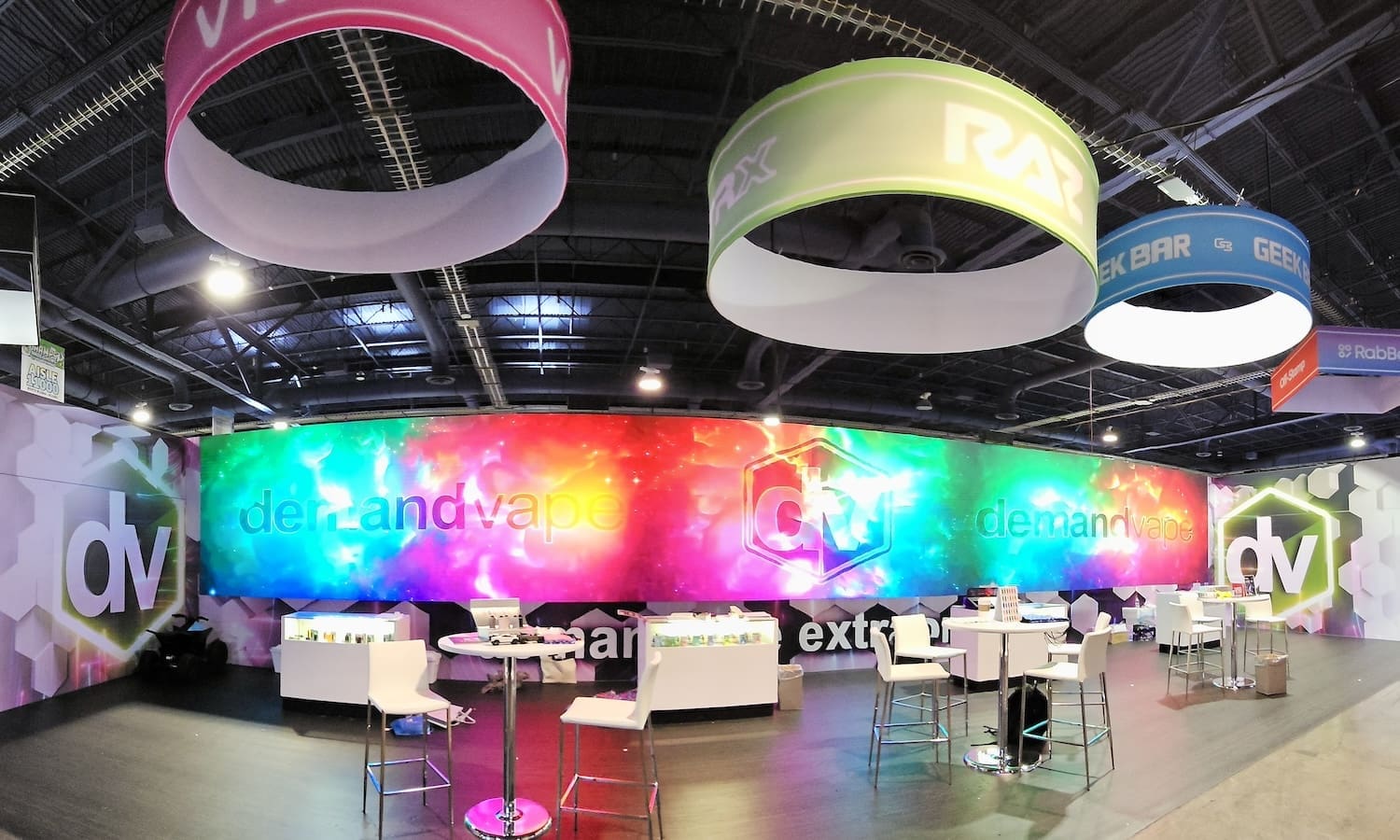
An event AV strategy should combine technology, creative planning, talented technicians, and reliable execution to help audiences remember your message.
Think about the last great trade show exhibit, conference keynote, or corporate event you attended. You probably remember what you saw and how the experience made you feel. What you may not remember are the hundreds of technical decisions happening behind the scenes.
The LED wall displaying perfectly timed content. The lighting directing your attention toward a speaker or product. The microphone delivering clear audio throughout a ballroom. The interactive display inviting you to explore. The technician monitoring everything so the audience never knows how complicated the production actually is.
That’s event AV at its best.
Audiovisual technology has moved far beyond projectors, screens, and microphones. Today, event AV encompasses LED video walls, professional audio, creative lighting, interactive technology, staging, livestreaming, computers, networking, content playback, technical staffing, and the infrastructure required to make all of those elements work together.
For trade show exhibitors, AV can mean the difference between disappearing into a crowded exhibit hall and capturing attention from across the floor. For meeting planners, it can determine whether hundreds or thousands of attendees can clearly see, hear, and engage with the program. For ambitious businesses, it can transform an ordinary event into a powerful extension of the brand.
Total Show Technology (TST) provides event AV services for conferences, trade shows, corporate meetings, and special events throughout Las Vegas, the Pacific Southwest, and across the country. With decades of production experience, advanced technology, and experienced technical teams, TST helps exhibit builders, meeting planners, and businesses turn creative ideas into event environments that perform when it matters.

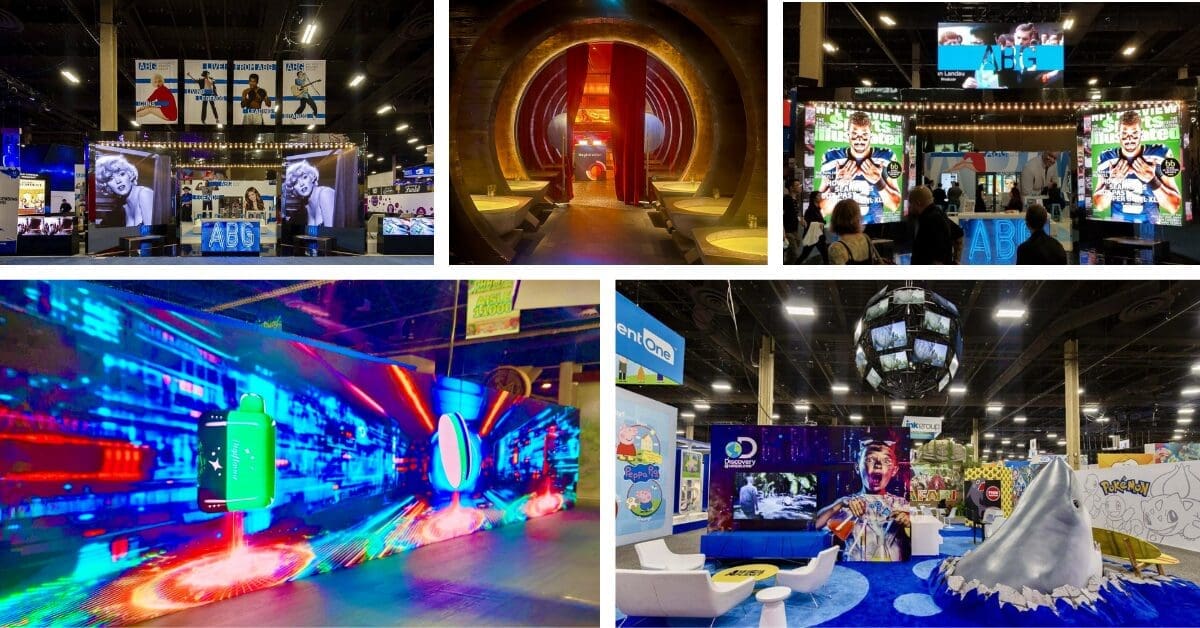
What Is Event AV?
Event AV refers to the audiovisual technology, technical infrastructure, planning, and production support used to communicate with and engage audiences during live events.
That can include:
- LED video walls and displays
- Projection and screens
- Professional sound systems
- Wireless and wired microphones
- Stage and architectural lighting
- Cameras and video production
- Computers and playback systems
- Interactive displays and touchscreens
- Livestreaming and hybrid-event technology
- Staging and presentation technology
- Event Wi-Fi and connectivity
- Technical direction and show calling
- Equipment installation and teardown
- On-site technicians and production crews
The individual technologies matter, but the real value comes from making them work together.
A spectacular LED wall isn’t particularly useful if the content wasn’t created at the correct resolution. An inspiring keynote can lose its impact if attendees can’t hear the speaker. An interactive experience can become frustrating if connectivity is unreliable.
That’s why professional event AV is ultimately about integration and execution, not equipment alone.
Why Event AV Matters More Than Ever
Audiences have changed.
People spend their days surrounded by high-resolution screens, streaming video, interactive technology, personalized digital experiences, and sophisticated visual content. Those expectations don’t disappear when they enter a convention center or ballroom.
At the same time, businesses are investing significant amounts of money in attending and producing events. Booth space, exhibit design, travel, hotels, sponsorships, marketing, staffing, and production can represent a major investment.
AV helps protect that investment by making the experience more visible, understandable, engaging, and memorable.
Done strategically, event AV can help you:
- Attract attention.
- Communicate complicated ideas quickly.
- Demonstrate products more effectively.
- Strengthen brand recognition.
- Keep audiences engaged.
- Improve presentation quality.
- Encourage interaction.
- Create content for remote audiences.
- Make an event feel polished and professional.
The question shouldn’t simply be, “What AV equipment do we need?”
A better question is: “What do we want people to see, hear, understand, feel, and do?”
Then you can determine which technologies will help accomplish those goals.
Event AV for Trade Shows: Winning the Battle for Attention
A trade show floor may be one of the most competitive environments your brand ever enters.
Hundreds—or thousands—of exhibitors may be trying to reach the same attendees. Visitors are surrounded by signage, video, conversations, demonstrations, lighting, music, and competing sales messages.
Your first challenge isn’t explaining your product.
It’s getting someone to stop.
Large-format LED displays can help establish visibility from across the hall. Motion graphics can communicate messages more quickly than static signage. Strategic lighting can emphasize architectural elements and products. Interactive displays can encourage visitors to explore, while demonstrations can transform passive spectators into participants.
For exhibit builders, this makes AV an important part of the creative process rather than something to add after the booth has already been designed.
Early collaboration between the exhibit builder and AV production company allows teams to consider viewing distances, LED dimensions, pixel pitch, structural integration, power, equipment locations, content requirements, lighting positions, audio coverage, and technical access while the design is still evolving.
The result is an exhibit where technology feels like part of the environment rather than equipment placed inside it.
How LED Walls Transform Trade Show Exhibits
LED technology has become one of the most powerful tools available to exhibitors because it combines scale, movement, flexibility, and extraordinary brightness.
An LED wall can serve several purposes simultaneously. From a distance, it can function as a beacon that helps attendees locate your booth. As visitors approach, it can communicate key messages or introduce products. Once they’re inside the exhibit, the same display can support demonstrations, presentations, branded content, or live video.
Modular LED systems also give designers tremendous creative freedom.
TST is a certified beMatrix bePartner with significant experience integrating beMatrix LEDskin® technology into modular exhibit environments. This expertise allows TST to work closely with exhibit builders to create clean digital surfaces that integrate into the physical structure of the booth.
But bigger isn’t automatically better.
Pixel pitch, viewing distance, content resolution, brightness, booth dimensions, sightlines, and budget all affect the right LED solution. An experienced event AV partner can help determine what configuration will accomplish the objective without paying for technology that doesn’t meaningfully improve the experience.
Event AV for Conferences and Corporate Meetings
Trade shows are about capturing attention. Conferences present a different challenge: maintaining it.
Whether you’re producing a 100-person leadership meeting or a conference with thousands of attendees, participants need to see presentations clearly, hear every speaker, follow the program easily, and remain engaged throughout the day.
A professional conference AV system may combine stage design, LED walls, projection, microphones, sound reinforcement, confidence monitors, presentation computers, cameras, lighting, graphics, video playback, livestreaming, and technical direction.
These elements should operate as one production environment.
When they do, attendees rarely think about the technology. They simply experience a polished event.
When they don’t, everyone notices.
10 Ways to Create a More Compelling Conference Stage
A conference stage is more than a platform for speakers. It’s the visual center of the event and often appears in photographs, livestreams, social media content, and post-event video.
To maximize its impact:
- Design around the audience. Consider room size, seating layout, sightlines, and viewing distances before choosing screens or LED configurations.
- Make audio the priority. Attendees will tolerate many imperfections, but they quickly disengage when they can’t understand a speaker.
- Use LED strategically. Large-format displays can support presentations, video, speaker identification, branding, and scenic design.
- Invest in professional lighting. Proper lighting makes speakers look better in the room and on camera while giving the stage depth and visual interest.
- Plan presentation content for the room. Slides that look great on a laptop may be impossible to read from the back of a ballroom.
- Use confidence monitors. Give speakers access to slides, notes, and timing information without requiring them to turn toward the main screen.
- Think about cameras early. Camera positions, lighting, scenic design, and stage blocking should all account for livestreaming or recording requirements.
- Create intentional transitions. Music, lighting changes, graphics, and video can make speaker entrances and session transitions feel polished.
- Build redundancy into critical systems. Backup microphones, playback devices, and other contingency measures can prevent a minor technical problem from becoming a major disruption.
- Rehearse. Technical rehearsals allow speakers and production teams to test presentations, microphones, videos, lighting cues, entrances, and transitions before attendees arrive.
Audio: The Part of Event AV You Can’t Afford to Get Wrong
Visual technology often gets the attention, but audio is arguably even more important.
A beautiful stage can’t rescue a presentation nobody can understand.
Professional audio planning considers room acoustics, audience size, ceiling height, speaker placement, microphones, ambient noise, stage monitoring, feedback prevention, and how sound behaves throughout the space.
Trade show audio introduces additional challenges because you’re competing with neighboring exhibits and general show-floor noise. The objective isn’t necessarily to become louder than everyone else. Strategic speaker placement and appropriate system design can deliver intelligible sound where it’s needed without creating an unpleasant environment.
An experienced audio engineer understands the distinction.
Lighting: More Than Making Things Visible
Lighting has enormous influence over how an event feels.
At conferences, lighting directs attention toward speakers, enhances scenic elements, improves camera images, and helps establish the mood of different sessions.
At trade shows, it can highlight products, emphasize architecture, define meeting areas, reinforce brand colors, and differentiate an exhibit from its surroundings.
Lighting also needs to be planned alongside video. An LED wall, camera system, and lighting design can affect one another, making coordination between disciplines important.
The best lighting rarely calls attention to itself.
It calls attention to what you want people to notice.
Interactive Technology and Audience Engagement
Some of the most effective event AV gives attendees something to do.
Interactive touchscreens can let visitors explore products at their own pace. Digital demonstrations can make complex services easier to understand. Games and interactive installations can increase dwell time. Live polling and audience-response tools can turn conference attendees from spectators into participants.
The technology should always serve a purpose.
Adding an interactive display because it looks impressive may produce little value. Designing an experience around a specific audience behavior—learning, exploring, comparing, sharing, registering, or starting a sales conversation—is much more powerful.
Don’t Forget the Content
One of the most common event AV mistakes happens before the equipment ever arrives.
The technology and content aren’t planned together.
A massive LED wall requires content designed for its dimensions and resolution. Presentations need typography that can be read from the back of the room. Motion graphics need appropriate timing. Product demonstrations need to account for how and where visitors will view them.
Discuss content specifications with your AV team early.
Otherwise, you risk investing in spectacular display technology only to fill it with content that doesn’t take advantage of it.
Why Technical Staffing Matters as Much as the Equipment
AV equipment doesn’t produce events. People do.
Experienced technicians install systems correctly, test equipment, manage presentations, monitor audio, operate lighting, troubleshoot problems, coordinate cues, and respond when something unexpected happens.
And unless you’re new to the trade show world, you know that something unexpected almost always happens.
A speaker arrives with a revised presentation. A video file won’t play. A microphone gets dropped. A schedule changes. A client decides to add a demonstration. A piece of equipment needs to be replaced.
The audience shouldn’t know any of that occurred.
A capable event AV team anticipates problems, develops contingency plans, and solves issues quietly while keeping the event moving.
How to Choose an Event AV Company
Price matters, but comparing AV proposals based only on the bottom line can be misleading.
Two quotes may contain similar equipment while representing very different levels of planning, staffing, service, and risk.
When evaluating an event AV company, ask:
- Does the company regularly produce your type of event?
- Does the team understand your venue?
- Will it collaborate with your exhibit builder, agency, venue, and other production partners?
- Who will be responsible for your project?
- What technical support will be available on-site?
- How does the company handle equipment failures or last-minute changes?
- Does it own and maintain the equipment being proposed?
- Can the team explain why specific technology is being recommended?
- Does the company understand your business and communication objectives?
- What happens between signing the contract and show day?
A strong partner should be able to discuss both technology and outcomes.
Why Early AV Planning Saves Money and Reduces Risk
Waiting until the final weeks before an event to address AV can limit options and increase costs.
Early planning gives your production team time to evaluate venue requirements, coordinate with other vendors, reserve equipment, develop technical drawings, review content specifications, identify power and rigging needs, schedule qualified technicians, and address potential conflicts.
For exhibit builders, early AV involvement can also prevent expensive redesigns.
A wall that can’t support the planned display, an inaccessible equipment location, insufficient power, or incorrect content dimensions may be relatively simple to fix during design development and extremely difficult to fix during installation.
The earlier AV becomes part of the conversation, the more options you generally have.
Event AV in Las Vegas: Why Local Experience Matters
Las Vegas offers extraordinary opportunities for exhibitors and meeting planners. It also presents production challenges that are difficult to appreciate until you’ve worked there.
Major venues such as the Las Vegas Convention Center, The Venetian Expo, Mandalay Bay Convention Center, Caesars Forum, and the city’s large conference hotels operate on enormous scales. Events may involve thousands of exhibitors, multiple halls, overlapping move-in schedules, strict labor requirements, complicated loading logistics, rigging coordination, and demanding production timelines.
Knowing the equipment is only part of the job. Knowing how to get the event built matters just as much.
TST has been providing audiovisual production and event technology support in Las Vegas for decades. That local experience helps our team anticipate logistical issues, coordinate efficiently with other event partners, and solve problems before they affect the client or audience.
10 Event AV Mistakes to Avoid
Even experienced event teams can encounter problems when AV planning happens too late or responsibilities aren’t clearly defined.
Watch for these common mistakes:
- Treating AV as a last-minute line item.
- Choosing equipment before defining objectives.
- Designing an exhibit without involving the AV team.
- Underestimating audio requirements.
- Forgetting about sightlines and viewing distances.
- Creating content before confirming display specifications.
- Failing to account for power, rigging, and connectivity.
- Understaffing the event.
- Skipping technical rehearsals.
- Selecting an AV provider based entirely on price.
Most of these problems are preventable.
Planning, communication, and experienced production management are often just as important as the technology itself.
Work With an Event AV Team That Understands the Entire Experience
The best event AV is almost invisible.
Attendees don’t think about signal distribution, processors, microphones, playback computers, lighting consoles, cables, rigging, or backup systems. They see a compelling exhibit. They hear a powerful presentation. They interact with a product. They understand a message. They remember a brand. That’s the point.
For exhibit builders, meeting planners, and businesses with ambitious ideas, TST provides the technology, technical expertise, and experienced people needed to turn those ideas into reliable live experiences.
Our capabilities include:
- LED video walls and displays
- Audio systems
- Professional lighting
- Video and presentation technology
- Interactive displays
- Computers and equipment rentals
- Staging and production support
- Event Wi-Fi
- Technical staffing
- Installation, operation, and teardown
Based in Las Vegas and serving clients throughout the Pacific Southwest and nationwide, Total Show Technology combines decades of event experience with advanced AV technology and hands-on production support.
Because ultimately, successful event AV isn’t about having the biggest screen or the newest technology.
It’s about using the right technology, in the right way, with the right people behind it—to make sure your audience notices, engages, and remembers.
